Recent discussions about proposed changes to Personal Independence Payments (PIP) and the wider benefits system have caused concern among many people with disabilities across the country.
With Personal Independence Payments (PIP), the key is in the title – this support is not intended to replace work and facilitate dependency, quite the opposite. Instead, PIP payments are crucial for enhancing the independence of people with a disability. It helps remove barriers that might otherwise prevent someone from achieving their goals and is designed to help people meet the extra costs associated with living with a disability. For someone who is vision impaired, those costs can be significant and ongoing and could include accessible technology, support with daily tasks, specialist equipment, additional transport costs or adaptations that help someone live and work independently and safely.
At NCW, learners develop the skills, confidence and independence needed for adult life and PIP can play an vital role in making that independence possible.
The Cost of Independence
Living independently with a vision impairment can involve expenses that sighted people rarely have to consider. Whether it’s paying for taxis when public transport isn’t accessible, purchasing specialist technology, replacing equipment or accessing support when needed, these additional costs can add up quickly. PIP can provide a vital financial contribution towards those costs and without it, maintaining independence becomes significantly more difficult.
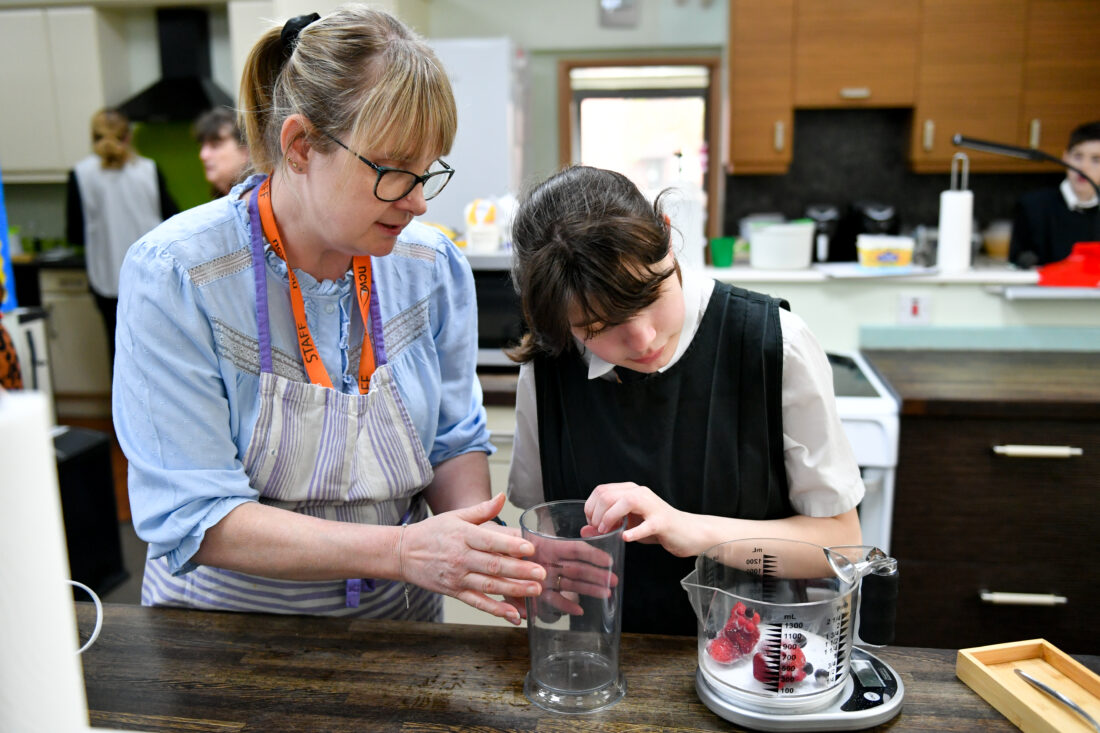
We caught up with Emma Williams, NCW’s Activities for Daily Living (ADL) Teacher, who is vision impaired herself, to chat about all things benefits and what Personal Independence Payment (PIP) means to people living with a vision impairment. She told us:
“It’s quite complicated and not the same for everyone, with standard and enhanced rates commonly known as lower and higher. People on the lower rate generally would be those who have mental health conditions, mild neuro divergence and people registered partially sighted. People on higher rate would be those with more serious disabilities including physical disabilities, those registered severely sight impaired and probably those with a multi sensory impairment. PIP is further split into two sections; daily living and mobility and some people may get the lower rate of one and higher of the other. The maximum high rate for both daily living and mobility would be around £775 every four weeks and those on the higher mobility rate might choose to have a Motorbility car instead of the money. Parents of children who are disabled are able to claim Disability Living Allowance (DLA) for children aged 5 – 16 but once the child turns 16 years old they have to reapply for PIP.
“The things that people might use the money for varies from person to person but a person who is severely sight impaired might use it for it for accessible equipment such as talking scales for the kitchen, a Perkins Brailler or an accessible mobile phone. A lot of accessible equipment is significantly more expensive than standard equipment – for example a food thermometer with a display costs approximately £10 whereas a talking one costs £30. It could be used to pay for someone’s time, such as a cleaner, or on transport such as taxis in rural areas or where the public transport service is inadequate. Those with other or additional disabilities might use it for incontinence products, lifting equipment or adapting a kitchen or bathroom for their needs.
“The application form is very long and has to be completed to deadline – it’s a good idea to consult an organisation or charity with knowledge of the disability/illness before filling it in for the best chance of success, This is likely to be followed by an interview, often done over the phone or on video call at which point a decision is made.”
Emma remembers the transition from Disability Living Allowance (DLA) to PIP and the challenges that came with it: “There was a DLA review around 15 years ago which moved all over-16s onto PIP. I think this was done to clamp down fraudulent claims but actually only a very small percentage were found to be fraudulent. When I moved over onto PIP, I needed to attend an interview around 40 minutes away from my home, needed someone to drive me there and, from the moment I walked in, I felt as though I was being tested. The whole process felt really difficult, especially as it was so far from home.”
The Future
On the future of disability benefits, Emma said:
“From what I have read, I am really hoping the current proposals won’t affect people with severe disabilities such as vision impairment or physical disabilities. Since PIP was introduced, there are more eligible neurodivergent people and people with mental health conditions which I believe has increased the overall spend. My fear is that those groups may be more likely to be affected by any changes.”
A significant part of Emma’s role at NCW is ensuring that students entering adulthood understand what support they are entitled to, how to access it and to help them develop their self-advocacy skills around finances. Her lived experience is a huge benefit in her role preparing students for what lies ahead, whatever changes are afoot.
Discussions about welfare reform often focus on figures, budgets and policy but for so many people who are blind or vision-impaired, PIP is not simply a payment. It helps fund the tools, support and services that enable them to travel independently, access education, secure employment and participate fully in their communities, saving the government a great deal of cash in the long run. As discussions about welfare reform continue, it is vital that the voices of disabled people remain at the centre of the conversation. Any future changes to the benefits system should recognise the genuine additional costs associated with living with a disability, including vision impairment and ensure that support remains available to those who need it.
