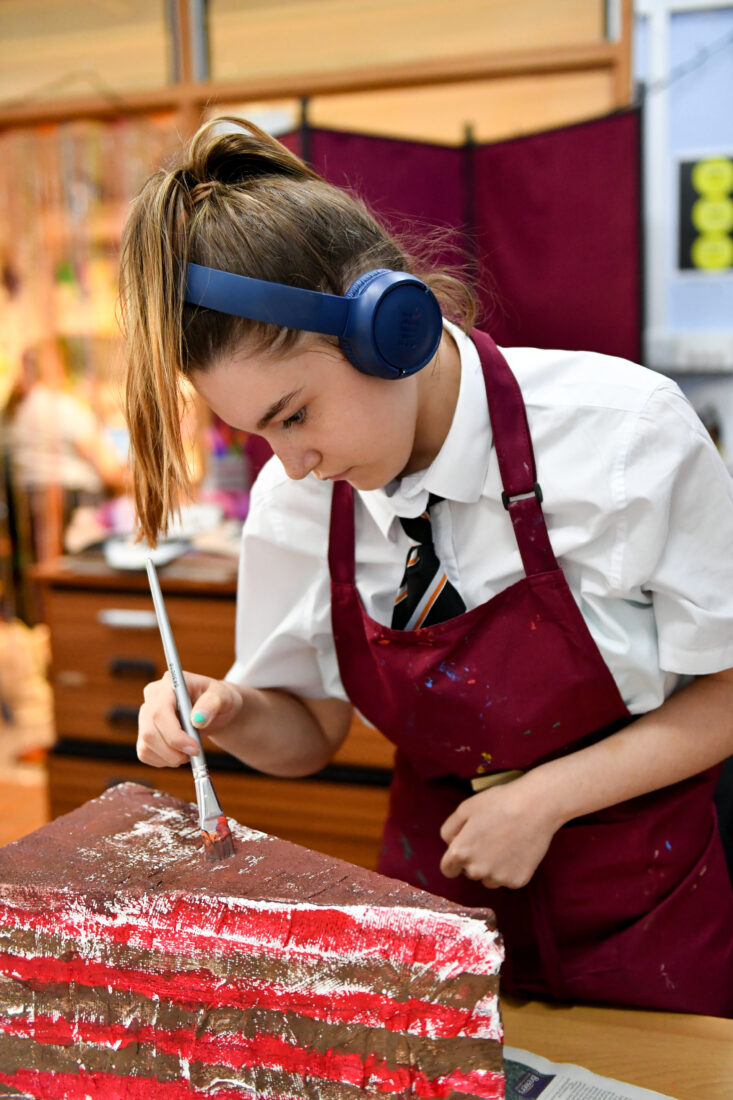
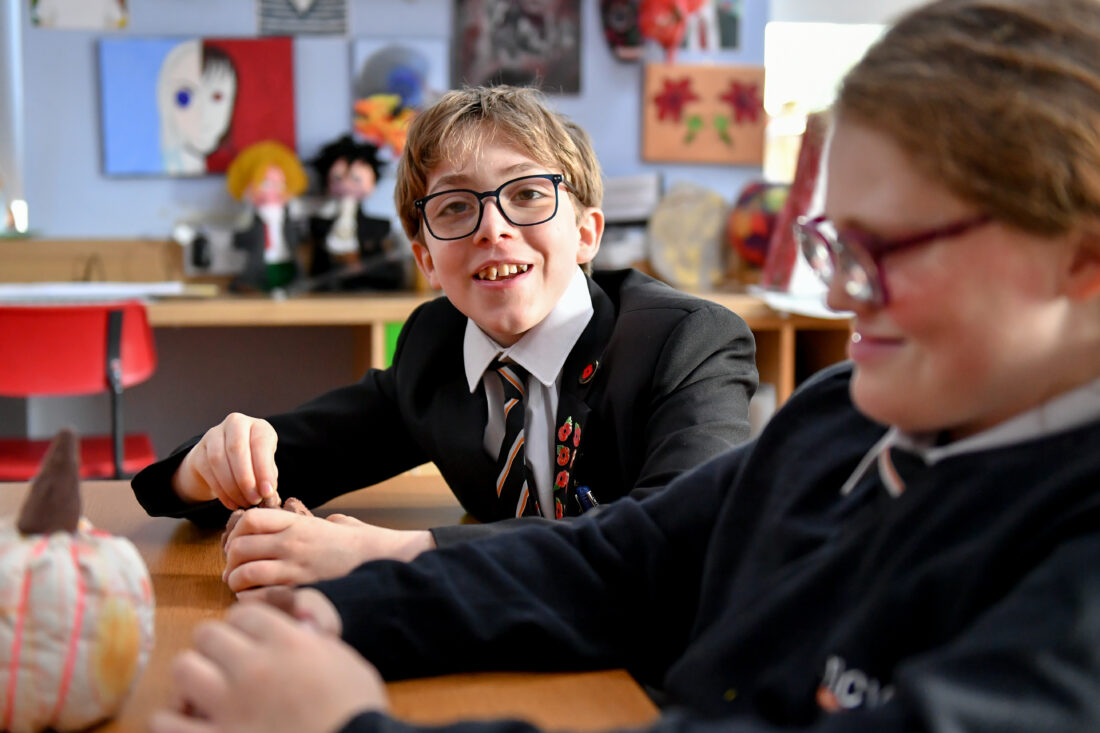
At NCW we believe that everyone can succeed in Art, and it is our role to enable students to realise their creative potential.
Tactile or visual learning plays an important part in a holistic education. The creative process is taught through practical projects – from concept and design to making and evaluation. This process is important in art and is also beneficial for a student’s general education. Art is a popular subject at NCW and we work to make lessons informative, creative and fun.
The Art and Design courses at NCW are tailor-made to individual students and designed to accommodate their particular vision impairment. The challenges of the art curriculum for a student with VI can include:
Difficulty in accessing art, museums and artists
The visual nature of most of the art curriculum
Difficulties in researching a topic on the internet
Limitations in the incidental learning which is acquired through sight.
Examples of adaptations for vision impaired students
Enabling access to art and artists – Previously, we have had guest artists to visit and work with our students in year 10 and 11, 12, 13 on specific projects GCSE and A Level. Also, our students have had direct access to the work of professional ceramicists, photographers, print makers, graphic designers and jewellers – covering all professional areas.
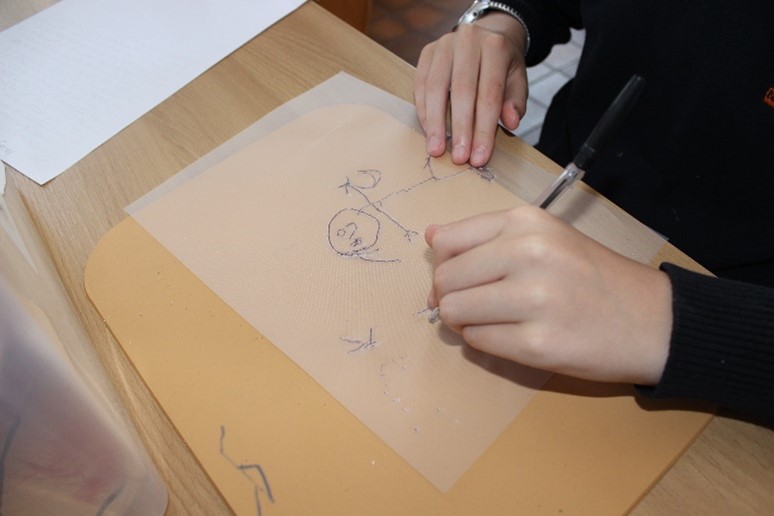
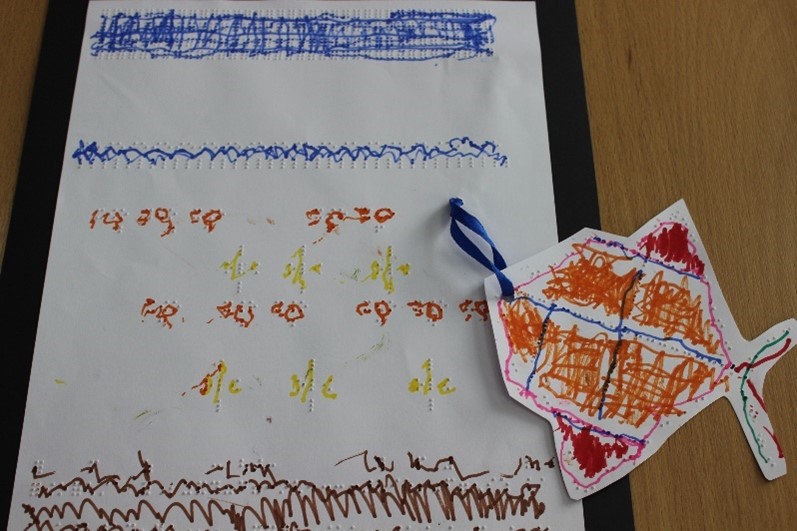
Providing opportunities for both tactile and visual learning with appropriate resources. We have developed course materials which are 2D and 3D, tactile and print, all adapted to suit the needs of the particular group. For example, for a lesson on the proportions of the head and face, students have access to print drawings, swell paper drawings and ‘Yorick’ the skull.
Assistance with researching a visual topic – Students are given guidance about how to access art resources for themselves to develop their independence skills. This can include advice about helpful websites, the provision of VI friendly topic sheets and one to one support when appropriate. We use Ap Seeing AI to read Artwork and provide a detailed description of the piece of work. Also, through the use of charity’s such as Living Paintings we can provide raised images of some Artwork.
At Key Stage 3, working with other departments. Students are given opportunities to work across the curriculum drawing inspiration from other subject areas.
At Key Stage 4 and Key Stage 5 students decide on their chosen area of study in order to develop their personal interests.
To read about the Art Curriculum intent, please click the button below: